

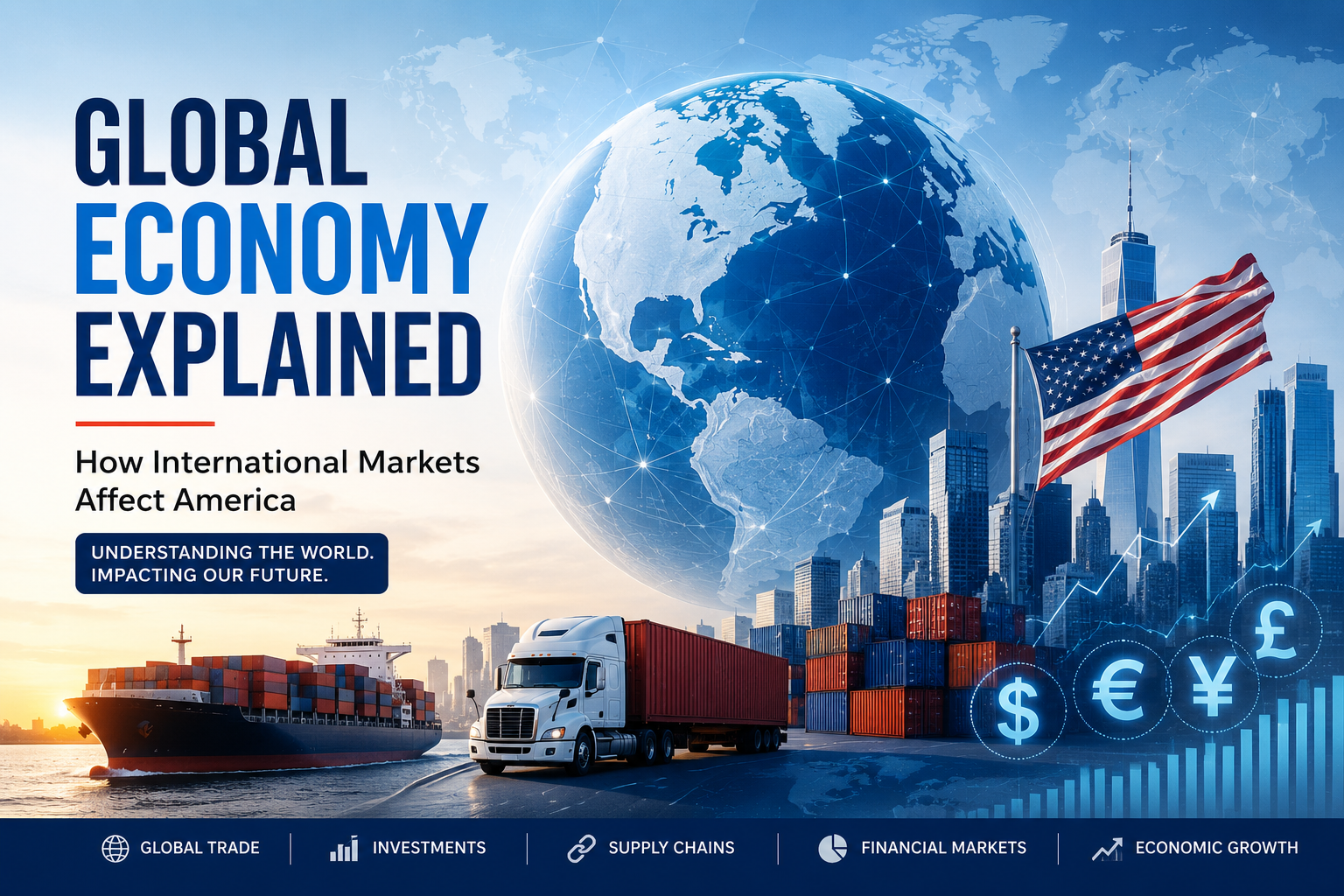
The global economy connects countries through trade, investment, technology, and financial systems. In today’s world, no country operates completely on its own. What happens in one part of the world can have a direct impact on businesses, consumers, and investors in the United States. Understanding the global economy can help people make better financial decisions and understand why prices, jobs, and markets change over time.
In this guide, we will explain how international markets affect America and why global economic trends matter to everyone.
What Is the Global Economy?
The global economy refers to the economic activities and financial connections between countries around the world. It includes:
- International trade
- Foreign investments
- Global supply chains
- Currency exchange
- International banking
- Financial markets
Countries buy and sell goods and services to one another every day. These activities create a network of economic relationships that influence growth, employment, and consumer prices worldwide.
Why the Global Economy Matters to America
The United States is one of the largest economies in the world. American companies sell products to customers across the globe, and many businesses depend on international suppliers for materials and products.
Because of these connections, economic events in other countries can affect:
- Product prices
- Job opportunities
- Stock markets
- Business growth
- Consumer spending
When global markets perform well, American businesses often benefit. When international markets face challenges, the effects can be felt throughout the U.S. economy.
International Trade and the U.S. Economy
International trade is one of the most important parts of the global economy. The United States exports products such as:
- Aircraft
- Technology
- Agricultural products
- Medical equipment
- Automobiles
At the same time, America imports products including:
- Electronics
- Clothing
- Machinery
- Consumer goods
Trade allows consumers to access a wider variety of products at competitive prices. It also helps American companies reach customers around the world.
However, disruptions in trade can lead to higher costs, supply shortages, and slower economic growth.
How Global Supply Chains Affect America
Modern businesses rely on global supply chains. A product sold in America may contain parts from several different countries.
For example:
- Raw materials may come from one country.
- Manufacturing may occur in another.
- Final assembly may happen elsewhere.
When supply chains run smoothly, businesses can operate efficiently. But problems such as natural disasters, political conflicts, or transportation delays can increase costs and create shortages.
This is one reason why prices for certain products sometimes rise unexpectedly.
The Impact of Foreign Investments
Foreign investment plays a major role in the U.S. economy. Investors from around the world purchase American stocks, bonds, and business assets.
These investments help:
- Create jobs
- Support business expansion
- Increase economic activity
- Improve market stability
Likewise, American companies invest heavily in international markets to grow their operations and increase profits.
A strong investment relationship between countries often supports long-term economic growth.
Currency Exchange and International Markets
Currencies play a significant role in global trade. Exchange rates determine how much one country’s currency is worth compared to another.
When the U.S. dollar is strong:
- Imported goods may become cheaper.
- Americans may spend less when traveling abroad.
- U.S. exports may become more expensive for foreign buyers.
When the dollar weakens:
- American exports can become more competitive.
- Imported products may cost more.
- Inflationary pressure can increase.
Currency movements affect businesses, investors, and consumers every day.
Global Events and Their Economic Impact
International events can quickly influence the American economy.
Examples include:
Economic Slowdowns
When major economies experience slower growth, demand for American exports may decline.
Political Conflicts
Wars and political tensions can disrupt trade routes, increase energy prices, and create uncertainty in financial markets.
Energy Market Changes
Global oil and gas prices affect transportation costs, manufacturing expenses, and household budgets.
Natural Disasters
Major disasters can interrupt production and shipping, leading to supply shortages around the world.
Because markets are interconnected, global events often influence economic conditions in the United States.
How International Markets Affect American Consumers
Many everyday products are connected to international markets.
Consumers may notice changes through:
- Gasoline prices
- Grocery costs
- Electronics prices
- Travel expenses
- Interest rates
For example, higher shipping costs or supply chain disruptions can increase the price of imported goods.
Similarly, global economic growth can improve business performance and support job creation across many industries.
The Role of Global Financial Markets
Financial markets around the world are closely connected.
Investors regularly monitor:
- Stock markets
- Bond markets
- Commodity markets
- Currency markets
A major market movement in Asia or Europe can influence trading activity in the United States within hours.
Global financial stability helps support investor confidence and economic growth.
The Future of the Global Economy
Technology, innovation, and digital connectivity continue to strengthen economic relationships between countries.
Key trends shaping the future include:
- Artificial intelligence
- Renewable energy investments
- Digital currencies
- Global e-commerce
- Advanced manufacturing
As international cooperation and competition evolve, the global economy will continue to play a major role in America’s economic future.
Conclusion
The global economy affects nearly every aspect of life in America. From trade and investments to supply chains and financial markets, international economic activity influences jobs, prices, and business opportunities. Understanding these connections helps individuals, businesses, and investors make informed decisions in an increasingly interconnected world.
As global markets continue to evolve, staying informed about international economic trends will become even more important for navigating the modern economy.
Frequently Asked Questions (FAQs)
1. What is the global economy?
The global economy refers to the interconnected economic activities of countries through trade, investment, finance, and business relationships.
2. How does international trade affect America?
International trade supports jobs, provides access to goods, helps businesses grow, and contributes to overall economic growth.
3. Why do global events impact U.S. prices?
Global events can disrupt supply chains, increase transportation costs, and affect the availability of products, leading to price changes.
4. How do currency exchange rates affect consumers?
Exchange rates influence the cost of imports, exports, travel, and international business transactions.
5. Why is the global economy important for investors?
Global economic conditions can affect stock markets, investment opportunities, business profits, and overall market performance.
