

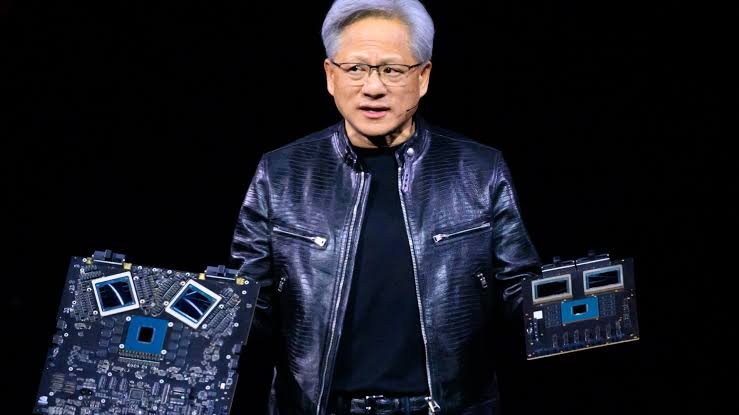
Nvidia has become one of the most influential companies in the technology industry. Once known mainly for its graphics cards used in gaming computers, the company is now a major force behind artificial intelligence (AI), data centers, and advanced computing. Its technology helps power AI chatbots, image generators, scientific research, autonomous systems, and many other digital innovations.
But how did Nvidia achieve this extraordinary rise? The answer lies in its long-term vision, powerful graphics processing units (GPUs), software ecosystem, and leadership under CEO Jensen Huang.
How Nvidia Started Its Journey
Nvidia was founded in 1993 by Jensen Huang, Chris Malachowsky, and Curtis Priem. The company initially focused on graphics technology for personal computers and gaming.
At that time, computer graphics were becoming increasingly important. Video games needed faster processors to display detailed images, realistic environments, and smooth animations. Nvidia saw an opportunity to develop specialized chips that could handle these demanding tasks.
The company’s graphics processing units helped transform gaming by making complex visual experiences possible. Over time, Nvidia expanded beyond gaming and began exploring other uses for its technology.
This decision would eventually become one of the most important factors behind its success.
Why GPUs Became Important for Artificial Intelligence
Traditional central processing units (CPUs) are designed to handle a wide variety of computing tasks. GPUs, on the other hand, can perform many calculations simultaneously, making them useful for workloads involving large amounts of data.
Artificial intelligence relies on extensive mathematical calculations to train and operate many modern machine-learning models. GPUs can accelerate these calculations significantly when the software and workload are designed to take advantage of parallel processing.
Nvidia recognized this opportunity before generative AI became a mainstream topic.
Its GPUs gradually became important tools for researchers working on deep learning, computer vision, language processing, and other AI applications. As AI models grew larger and more complex, demand for powerful computing systems increased.
Nvidia was well positioned to benefit from this change.
CUDA: The Software Advantage Behind Nvidia’s Growth
Nvidia’s success is not based on hardware alone. One of its most important developments is CUDA, a parallel computing platform introduced in 2006.
CUDA allows developers to use Nvidia GPUs for tasks beyond graphics rendering. Researchers and software engineers can use the platform to accelerate scientific calculations, machine learning, and other demanding applications.
Over the years, a broad ecosystem of tools, libraries, developers, and applications has grown around Nvidia’s technology.
This ecosystem creates an important competitive advantage. Organizations that have built their AI systems around Nvidia hardware and software may face additional costs and technical challenges when switching to alternative platforms.
As a result, Nvidia competes not only through chip performance but also through the software and infrastructure that support its products.
Jensen Huang’s Leadership and Long-Term Vision
Jensen Huang has played a central role in Nvidia’s development. As a co-founder and longtime CEO, he has helped guide the company’s strategy through major changes in the technology market.
One important part of Nvidia’s approach has been investing in technologies that may take years to deliver significant commercial returns.
The company continued developing GPU computing capabilities even when artificial intelligence was not yet a major consumer technology trend. This investment helped prepare Nvidia for the later expansion of deep learning and generative AI.
Huang’s leadership has also emphasized the importance of complete computing systems rather than individual chips. Nvidia now offers processors, networking products, software, and integrated computing platforms designed for AI workloads.
This broader strategy allows the company to serve businesses building large-scale AI infrastructure.
The Generative AI Boom Changed Nvidia’s Position
The launch and rapid adoption of generative AI tools brought new attention to Nvidia’s technology. AI systems capable of generating text, images, software code, and other content require substantial computing resources during training and, in many cases, deployment.
Technology companies, cloud providers, research institutions, and enterprises have invested in infrastructure to develop and operate these systems.
Nvidia’s data-center GPUs and related products have become important components of this infrastructure.
The company also provides networking technology and complete systems that help connect large numbers of processors. These systems are valuable because advanced AI workloads often require multiple GPUs to work together efficiently.
The result is that Nvidia has moved far beyond its original identity as a gaming graphics company.
How Nvidia Makes Money
Nvidia generates revenue through several technology markets.
Data centers: AI accelerators, networking products, and computing systems for cloud providers and enterprise customers are central to its business.
Gaming: GeForce graphics cards remain an important part of Nvidia’s business, serving gamers and PC enthusiasts.
Professional visualization: Specialized graphics products support designers, engineers, and other professionals who work with complex visual environments.
Automotive: Nvidia supplies computing platforms and software for automotive applications, including driver assistance and autonomous-driving development.
Embedded and edge computing: Its platforms also support robotics, industrial applications, and other systems that process information close to where it is generated.
Although these businesses serve different customers, AI infrastructure has become a particularly important growth driver.
Challenges Nvidia Faces
Despite its strong position, Nvidia faces significant challenges.
First, competition is increasing. AMD and other chipmakers are developing competing accelerators, while major cloud companies are designing their own AI chips.
Second, Nvidia’s business is influenced by the large capital investments made by AI companies and cloud providers. If customers reduce spending or delay infrastructure projects, demand could weaken.
Third, export restrictions and geopolitical tensions can affect access to important markets.
Finally, the technology industry changes quickly. Nvidia must continue improving performance, energy efficiency, software support, and overall system costs to maintain its competitive position.
Investors should also remember that a successful company is not automatically a good investment at every price. Nvidia’s future share-price performance depends on expectations, valuation, earnings, competition, and broader market conditions.
What Does the Future Hold for Nvidia?
Nvidia’s future will depend partly on whether AI adoption continues to expand across industries. Businesses are exploring AI applications in healthcare research, financial services, manufacturing, education, software development, and customer support.
Demand for AI computing may also grow as models become more capable and AI agents handle increasingly complex tasks.
However, future growth is not guaranteed. Customers will look for better performance, lower operating costs, and measurable returns on their AI investments. Alternative chips and more efficient software could also change the competitive landscape.
Nvidia’s combination of GPUs, networking, software, and integrated systems gives it a strong foundation, but continued innovation will be essential.
Conclusion
Nvidia’s extraordinary rise reflects decades of investment in graphics technology, GPU computing, and software development. The company successfully expanded its technology into artificial intelligence before AI became a mainstream business priority.
Its CUDA ecosystem, Jensen Huang’s long-term strategy, and the growing need for AI computing have helped establish Nvidia as a major industry leader.
The next chapter will depend on how effectively Nvidia responds to competition, changing customer needs, and the evolving economics of artificial intelligence. Its story offers an important lesson in technology business: preparing for a future market can be just as valuable as leading an existing one.

2 Comments
Pingback: The Companies Quietly Controlling Wall Street: 7 Big Tech Giants to Know - americachronicle.com
Pingback: Bella Hadid Fashion Evolution: How She Keeps Reinventing Her Personal Style - americachronicle.com