


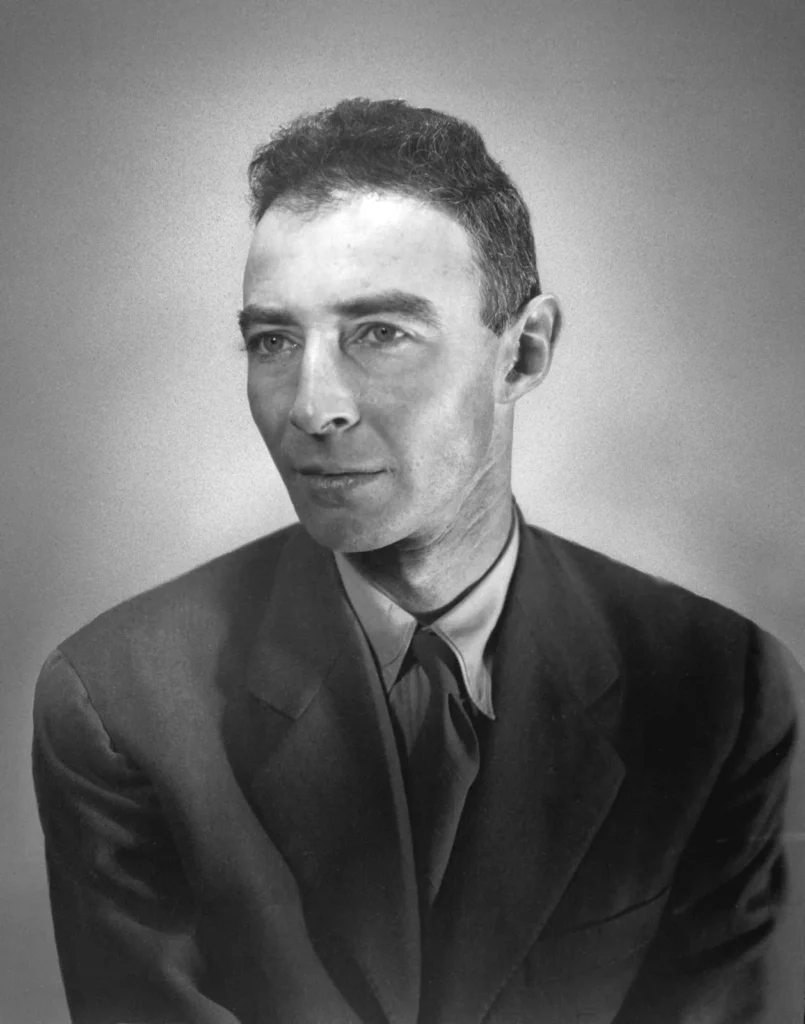
J. Robert Oppenheimer was one of the most influential scientists of the 20th century. Known as the “Father of the Atomic Bomb,” he played a leading role in developing the world’s first nuclear weapons during World War II. His work changed science, warfare, politics, and international relations forever. Although he made groundbreaking contributions to physics, his life was also filled with difficult moral questions about the use of nuclear weapons.
This article explores J. Robert Oppenheimer’s life, education, scientific achievements, and lasting legacy in simple and easy-to-understand language.

Who Was J. Robert Oppenheimer?
J. Robert Oppenheimer was an American theoretical physicist born on April 22, 1904, in New York City. From a young age, he showed exceptional intelligence and a deep interest in science, literature, and languages. His curiosity and love for learning helped him become one of the world’s leading physicists.
He became famous for directing the Manhattan Project, the secret U.S. research program that developed the first atomic bomb during World War II. While this achievement helped end the war, it also introduced the world to the dangers of nuclear weapons.
Early Life and Education
Oppenheimer grew up in a well-educated family that encouraged learning. He attended the Ethical Culture School in New York, where he excelled in science and mathematics.
Later, he studied chemistry at Harvard University, but soon discovered his passion for physics. After graduating with honors, he continued his education at the University of Cambridge in England and later earned his doctorate at the University of Göttingen in Germany. During this time, he worked with some of the greatest physicists of his generation and developed a strong foundation in quantum mechanics.
Career as a Theoretical Physicist
After completing his studies, Oppenheimer returned to the United States and taught at the University of California, Berkeley, and the California Institute of Technology (Caltech).
His research covered several important areas of theoretical physics, including:
- Quantum mechanics
- Nuclear physics
- Astrophysics
- Cosmic rays
- Black hole theory
His scientific work helped advance modern physics and inspired many future researchers. Oppenheimer was respected not only for his intelligence but also for his ability to explain complex scientific ideas.

The Manhattan Project
During World War II, the U.S. government launched the Manhattan Project to develop nuclear weapons before other countries could do so.
In 1942, Oppenheimer was chosen to lead the scientific team at the Los Alamos Laboratory in New Mexico. He brought together many of the world’s best scientists and successfully guided the project despite enormous technical and logistical challenges.
On July 16, 1945, the first successful nuclear bomb test, known as the Trinity Test, took place in the New Mexico desert. This event marked the beginning of the nuclear age and became one of the most significant moments in modern history.
A Moment That Changed History
After witnessing the Trinity Test, Oppenheimer famously recalled a line from the ancient Hindu scripture, the Bhagavad Gita:
“Now I am become Death, the destroyer of worlds.”
This quote reflected his deep emotional response to the immense power of the atomic bomb. Although he had achieved a remarkable scientific milestone, he also understood the devastating consequences of nuclear weapons.
Life After World War II
Following the war, Oppenheimer became a strong supporter of international control over nuclear weapons. He believed that scientific discoveries should be used responsibly and warned against an uncontrolled nuclear arms race.
However, during the early years of the Cold War, his views became controversial. In 1954, the U.S. government revoked his security clearance after questioning his political associations and opinions about nuclear policy.
Years later, many historians and government officials recognized that Oppenheimer had been treated unfairly. His reputation as one of America’s greatest scientists was eventually restored.
Scientific Legacy
J. Robert Oppenheimer’s influence extends far beyond the Manhattan Project. His work helped shape modern theoretical physics and inspired generations of scientists.
His legacy includes:
- Advancing quantum theory and nuclear physics.
- Leading one of history’s most important scientific research projects.
- Inspiring discussions about ethics in science.
- Encouraging responsible use of advanced technology.
- Influencing international debates on nuclear security.
Today, Oppenheimer remains a symbol of scientific brilliance, leadership, and ethical responsibility.

Why J. Robert Oppenheimer Still Matters Today
The world continues to face important questions about artificial intelligence, biotechnology, and nuclear technology. Oppenheimer’s life reminds us that scientific progress brings both opportunities and responsibilities.
His story teaches that innovation should always be guided by ethics, careful decision-making, and concern for humanity. Scientists, leaders, and policymakers still study his life to better understand the relationship between science and society.
Key Takeaways
- J. Robert Oppenheimer was one of America’s greatest theoretical physicists.
- He directed the Manhattan Project during World War II.
- His leadership helped develop the first atomic bomb.
- He later advocated for responsible control of nuclear weapons.
- His scientific achievements and ethical reflections continue to influence the modern world.
Conclusion
J. Robert Oppenheimer changed the course of history through his extraordinary contributions to science. As the leader of the Manhattan Project, he helped create one of the most powerful technologies ever developed. At the same time, he became a powerful voice for ethical responsibility in scientific research.
His life demonstrates that knowledge is most valuable when combined with wisdom and compassion. More than seventy years later, J. Robert Oppenheimer remains an enduring figure whose achievements and lessons continue to shape science, global security, and the future of humanity.
